
Visual IVR replaces a phone menu's spoken prompts with a visual, tap-through interface that opens right on the customer's phone. Instead of listening through "press 1 for billing, press 2 for support," the caller gets a link, taps into a branded self-service screen, and completes the request there instead of staying on hold.
Traditional IVR, sometimes called a VRU, works the same way it did twenty years ago: a recorded voice reads out a numbered list and the caller guesses which option fits. A visual IVR system, also written as visual interactive voice response, keeps the phone call open but adds a screen. Zappix's LLM-powered conversational AI listens to what the customer actually says, then routes them straight to the matching visual screen instead of a generic menu tree.
No app download and no account creation. The link opens over mobile web the moment the call connects, and customers can activate a card, reset a password, submit a claim, or make a payment in the same interaction that used to end in a hold queue. See how it compares to a full AI Self-Service deployment, or request a Visual IVR demo
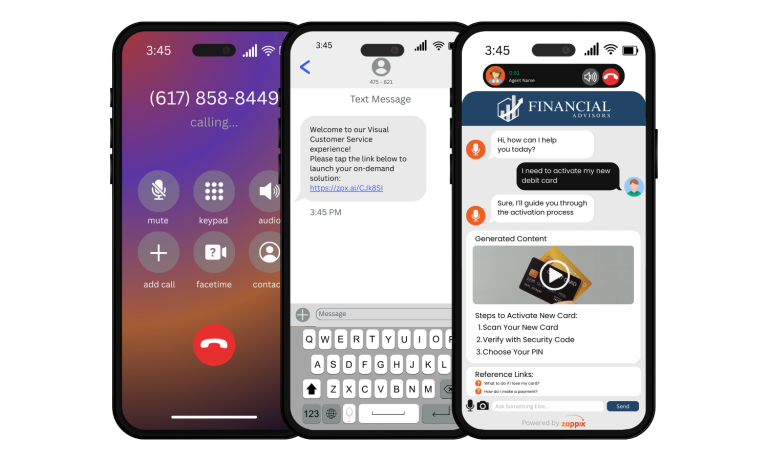
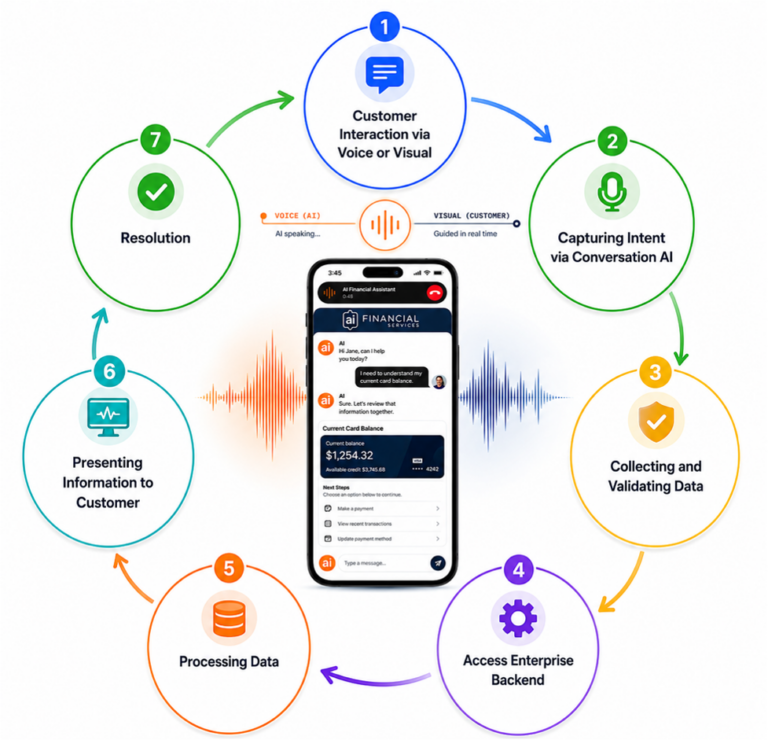
Customer dials in and is immediately met by Zappix AI instead of a queue.
Branded visual interface on the customer’s phone, synced with the voice conversation.
Captures customer intent accurately — no scripted menus or rigid IVR trees.
Live connection to CRM, CCaaS, and backend systems for real-time data and transactions.
Full resolution from intent to confirmation — no agent needed for contained calls.
75%+
↓40% - 60%
25% - 50%
Reduction in Average Handle Time
Calls deflected to
self-service
15 - 25
Point boost in CSAT Score
↓40%
Reduction in
Cost-to-Serve
Visual IVR is a self-service technology that swaps a phone menu's audio prompts for a visual, tap-through interface on the customer's own phone. The call stays open while a link opens a branded screen where the customer completes tasks like payments, claims, or scheduling without navigating a spoken menu.
A traditional IVR, or VRU, reads out a numbered menu and asks the caller to guess the right option by voice or keypad. Visual IVR keeps the phone call active but adds a synchronized screen, so the customer sees their options and taps through them instead of listening and guessing.
Zappix's visual IVR system pairs LLM-powered conversational AI with a branded mobile web interface and a live connection to CRM, CCaaS, and backend systems. The AI understands what the customer needs, opens the matching screen, and completes the transaction with real account data in real time.
No. The visual interface opens over mobile web the moment a call connects, through an SMS link. Customers don't download an app or create an account to use it.
Zappix Visual IVR deployments typically reach containment rates above 75%, meaning three out of four calls are resolved without ever reaching a live agent, alongside a 40 to 60% reduction in average handle time.
Visual IVR is deployed across healthcare, health plans, insurance, financial services, public sector, retail, and BPO organizations, anywhere a high volume of routine calls like billing, scheduling, or claims can be resolved without a live agent.